


TECHNICAL OVERVIEW
Converting the rotary motion of a stepping motor into linear motion can be accomplished by several mechanical means, including rack and pinion, belts and pulleys and other mechanical linkages. All of these designs require various mechanical components. The most effective way to accomplish this conversion is within the linear actuator itself.
Description
A conventional stepper motor generates rotary motion by sequentially energizing its electromagnetic coils, which create a pulsed magnetic field that drives the rotation of a permanent magnet or soft‑iron rotor. The angular displacement per pulse—known as the step angle—determines the motor’s positional resolution.
Linear actuators translate this precise rotary motion into controlled linear displacement. The resulting linear resolution depends directly on the motor’s step angle combined with the mechanical conversion mechanism employed. The first practical linear stepping actuator was patented in 1968 (U.S. Patent 3,402,308) by William Henschke, marking a key milestone in electromechanical motion control. Since then, linear actuators have become indispensable in fields requiring accurate, repeatable linear positioning, such as semiconductor manufacturing, optical alignment systems, laboratory automation, and precision fluid dispensing.
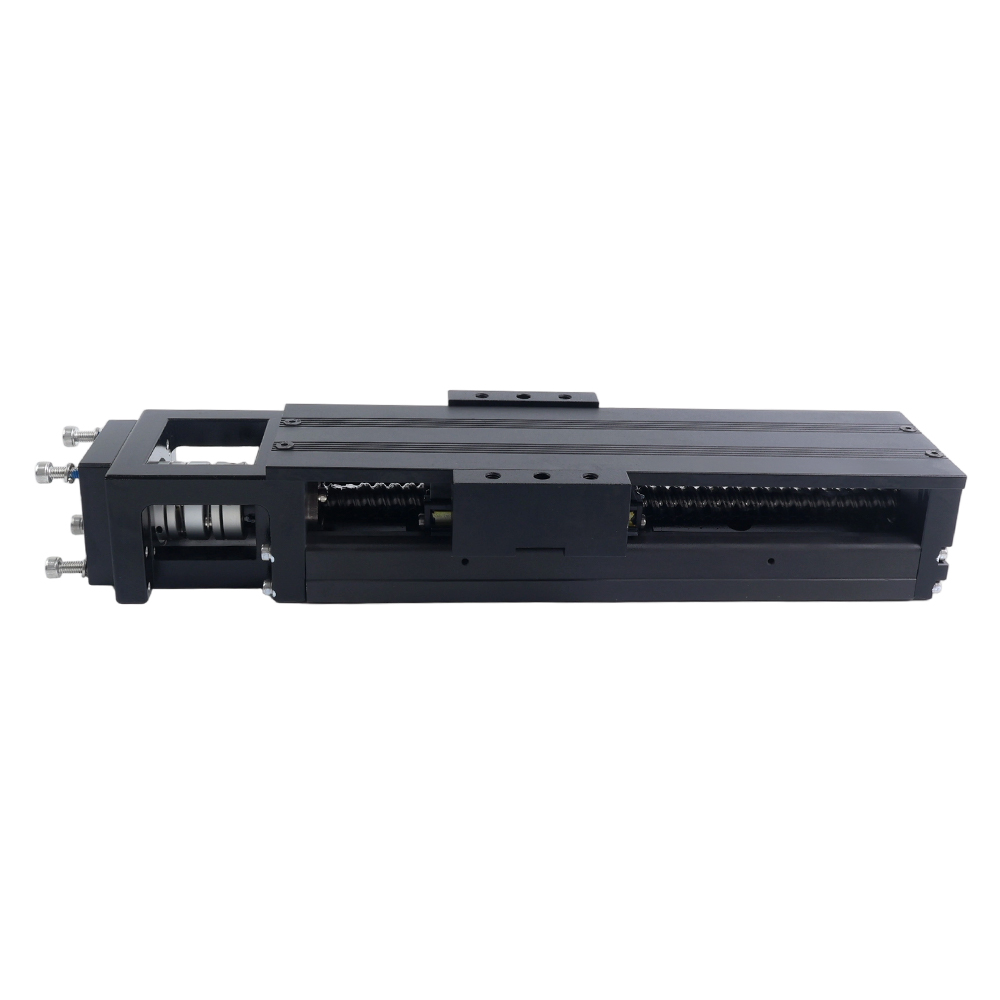
In screw‑based linear actuators, a threaded nut is integrated within the rotor assembly. A matching lead screw engages this nut, and as the rotor turns, the screw advances linearly—provided it is prevented from rotating. This anti‑rotation constraint can be achieved internally (e.g., through a keyed or splined shaft design) or externally (using a stationary guide or a captive nut assembly that slides along a fixed rail). The linear travel per motor step is a function of both the step angle and the screw’s thread pitch, enabling fine control over displacement and force.
Integrating the rotary‑to‑linear conversion mechanism directly within the motor housing offers significant design advantages. This “all‑in‑one” approach simplifies system architecture, reduces the need for external couplings or mechanical linkages, and allows for a compact, modular actuator that can be directly installed into applications ranging as robotic joints, valve control, and precision stages. By encapsulating the motion conversion inside the motor, designers gain a reliable, self‑contained linear drive solution that improves accuracy, reduces assembly complexity, and enhances overall system reliability.